
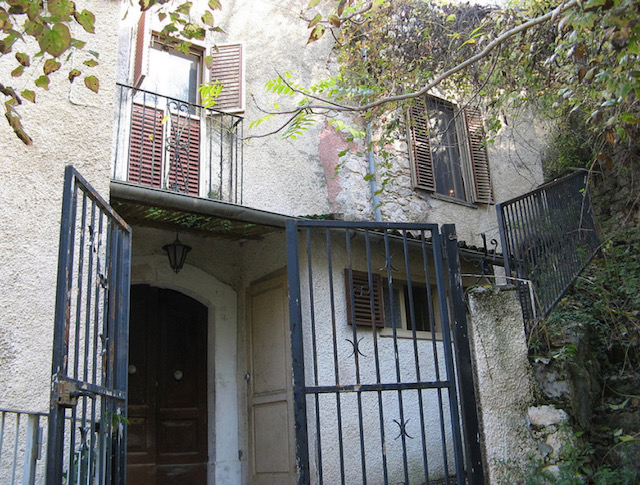
Our outside bathroom Italy adventure was a reminder that old houses have a way of showing you just how modern our modern conveniences really are.
When you walk through an old Italian house and find a bathroom neatly incorporated into the interior, with proper plumbing disappearing invisibly into floors and walls, somebody probably paid for that convenience long after the original house was built. Historic houses were built for a different way of living, and adding modern bathrooms later could mean finding routes for water, drains and electricity through floors, beams and walls that were never designed to accommodate them. In houses with thick masonry, making those changes without destroying the original fabric can become a project of its own. Historic-building guidance still treats new plumbing as one of the more intrusive parts of adding bathrooms to old structures.
Our house had avoided most of that inconvenience with a wonderfully simple solution: put the bathroom outside.
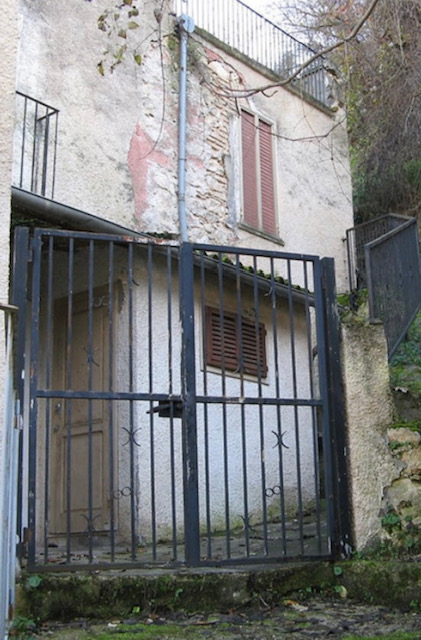
There was exactly one bathroom in the entire house, a tiny structure attached to the exterior beside the side entrance. You stepped outside the house to use it. Whatever architectural dignity our early eighteenth-century farmhouse had accumulated over several hundred years came to an abrupt end at this little box stuck against the wall.
Judging by the tiles, fixtures and general aesthetic crimes committed inside, it appeared to have been updated sometime around the 1950s or 1960s. The door and window had been painted a color that lived somewhere between yellow and beige, although neither word adequately describes it. It was one of those colors created during an era when apparently nobody felt obligated to give colors names.
Structurally, however, the little bathroom was serious. Someone had laid brick directly against the old house and built a small room with one door and one window. Then, because apparently the rest of the structure wasn’t sufficiently indestructible, somebody decided to cover the roof with asbestos cement sheets. At the time, asbestos was valued for durability and fire resistance. Decades later, of course, it became one more thing you really don’t want to discover attached to your house.
Inside was everything a modern bathroom technically required, provided your definition of “modern” was extremely flexible. First came the sink, complete with a plastic cabinet above it. Next was the toilet. Flushing it required technique. You pushed the plastic lever on top, the toilet flushed, and then you waited to see whether it would stop. Usually it didn’t. You played with the lever several times until the mechanism finally decided enough water had been sacrificed.
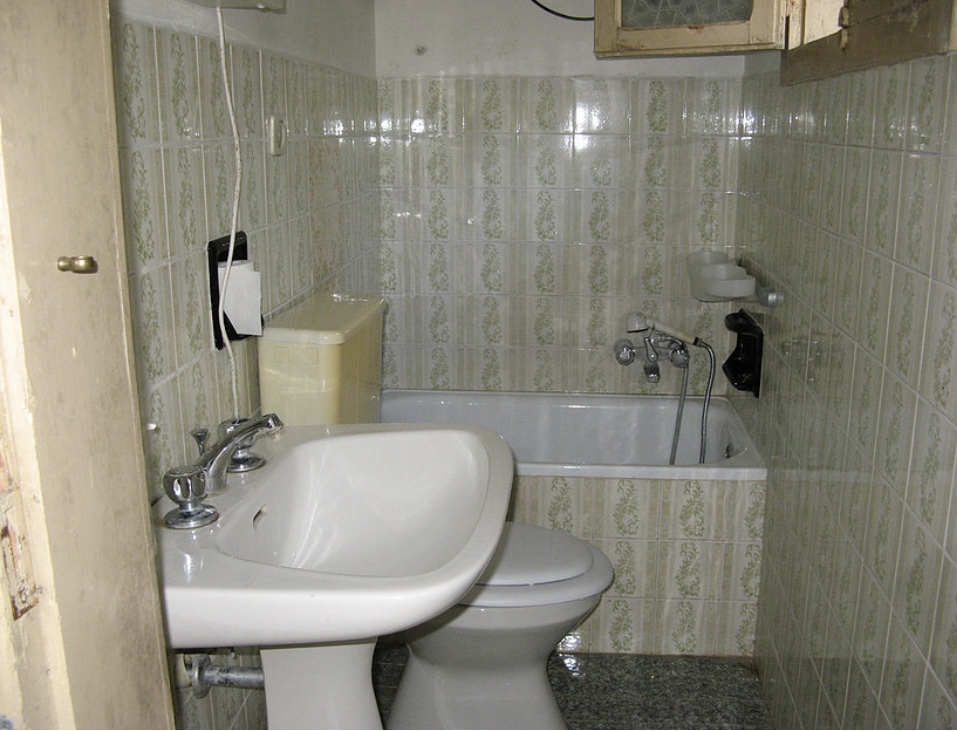
Then came the bathtub. Calling it a bathtub is generous. It was more like half a bathtub designed by somebody who had studied human anatomy entirely through rumor. You had to climb over the side to get into it, and the bottom had two different levels. Standing normally wasn’t really an option. On one side you were elevated so high that your head and shoulders were practically sharing living space with the water heater. On the other side you dropped down low enough that the shower head was suddenly far too close. The practical solution was to shower bent into something resembling the letter S. Sitting worked better. Standing required negotiation.
Then there was the pièce de résistance. The water heater was mounted beside the bathtub and connected to a 240-volt electrical outlet right there in the bathing area. Hot water and high voltage, together at last.
It was less a shower than an electric chair with plumbing.
Outside Bathroom Italy: My First Improvement
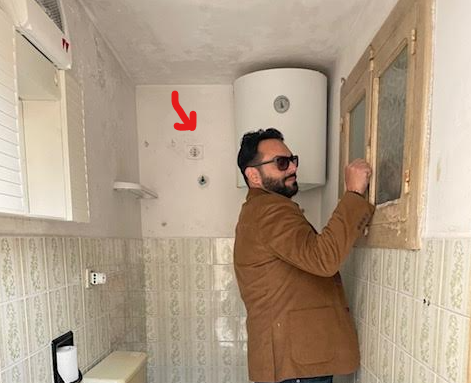
Before attempting anything ambitious, I decided on one immediate improvement: move the water heater. I relocated it from the bathtub area to above the toilet and properly sealed the 240-volt outlet near the tub. This significantly reduced the possibility of electrocution while showering, which I considered progress.
It introduced another hazard. The bathroom was so small that when you stood up from the toilet, you now needed to remember there was a water heater directly above you. Stand too quickly and you could give yourself a concussion. Still, I considered this preferable to being electrocuted while naked. Renovation is about priorities.
Summer, Winter and Moist Toilet Paper
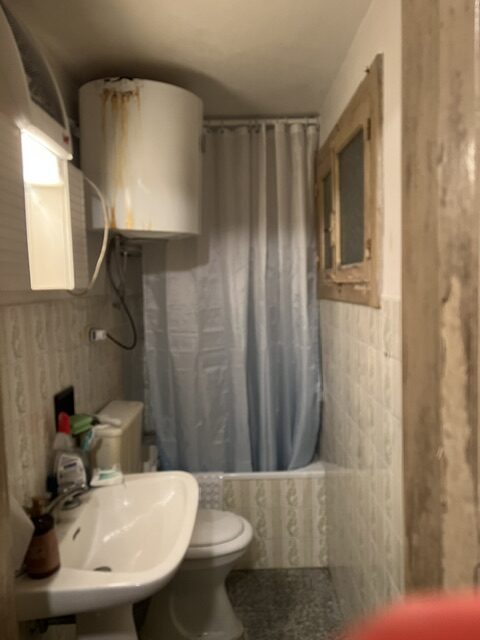
The bathroom had no interest in providing comfort during any season. In summer, it was hot. In winter, it was cold. And regardless of season, it seemed permanently humid. The toilet paper absorbed that humidity until it reached a consistency somewhere between paper and mashed potatoes. You learned to approach the roll carefully because pushing a finger through it was not merely possible, it was practically inevitable.
There are experiences in life that change a person. Having your finger unexpectedly emerge through wet toilet paper is one of them.
Winter added another level of entertainment. The toilet seat was cold enough to make you reconsider whether whatever brought you into the bathroom was really that urgent. Taking a shower required planning. Once finished, you had to dry yourself with the coordination of a ninja because the room was so narrow that almost every movement threatened to put some warm, freshly showered part of your body against freezing wall tile.
You didn’t dry yourself. You performed evasive maneuvers.
Someone Always Arrived at Exactly the Wrong Time
The bathroom’s location beside the side entrance created another problem: privacy. For reasons I will never understand, if I was expecting a delivery or somebody was supposed to stop by the house, they developed the supernatural ability to coordinate their arrival with my bowel movements.
It was astonishingly reliable. I could spend hours working around the house with nobody appearing. Eventually I would go into the bathroom.
Knock, knock.
There I was, sequestered inside this tiny box while whoever I was waiting for stood immediately outside. At that point I became infantry hiding from the enemy in a foxhole. Absolute silence. Don’t move. Maybe they’ll leave.This left two options. Wait quietly and hope the person eventually gave up, or open the door and pop out like a jack-in-the-box. The situation became even better because mobile reception inside the bathroom was normally terrible. Except, apparently, when somebody was standing outside trying to reach me. Then I would suddenly have full bars.
My phone would ring inside the bathroom, approximately three feet from the person who had just knocked. There would be a short silence. Then another knock.
At least it was a great icebreaker.
Winter Shower Logistics
Cold nights required another decision. You could take a very fast shower using the limited supply of hot water, or you could turn on the little electric heater inside the bathroom. Turning on the heater made the bathroom warmer. It also tripped the breaker.
The house had one main breaker, and naturally it wasn’t anywhere convenient. It was outside at the front of the house. So showering with heat could become a small expedition. Heater on. Breaker trips. Get dressed enough to go outside. Walk around to the front. Reset breaker. Return.
There was another important detail: do not close the front door behind you. If you did, you could lock yourself outside. The previous owners had apparently understood that this possibility was sufficiently high to justify leaving a spare key hidden in one of those magnetic key holders attached near the water heater.
The fact that I knew exactly where that emergency key was tells you everything you need to know about whether this happened more than once.
The Plumbing System That Watered the Caves
Then there were the pipes. The plumbing resembled less a residential water system and more an experimental sprinkler installation. Old galvanized pipes ran through the bathroom, and over the years they had developed enough holes and leaks that water continually found its way toward the caves underneath the house.
We already had two ancient caves below the property. They did not require irrigation. The bathroom disagreed.
Every problem seemed connected to another problem. Moisture, pipes, electricity, limited hot water, freezing tile, the bathtub, the toilet, the roof. Fix one thing and another waited patiently for its turn. From the beginning, there was never any question that this bathroom would survive the restoration.I
It was going to die.
The only question was when.
The Day Had Finally Come
Eventually the new indoor plumbing was working. For the first time, we had a functioning bathroom inside the house. A real bathroom. You could walk to it without going outdoors. You could shower without performing advanced geometry around a bathtub and water heater. You could use the toilet without worrying about standing up and knocking yourself unconscious.
Most importantly, the little outside torture chamber was no longer necessary. Its day had come.
I was looking forward to this.
I am good with a sledgehammer. I worked for the railroad for many years. I know how to swing one. I can hit the same place repeatedly with plenty of force. So I picked up a 20-pound sledgehammer and walked toward the bathroom with the confidence of a man who had been personally insulted by a building.
This wasn’t demolition anymore. This was revenge.
Eye for an eye. Toilet paper for toilet paper.
I chose my spot on the side wall, raised the sledgehammer and swung. The bathroom had apparently been constructed to survive a meteorite impact. The hammer hit the wall. The wall barely cared. The sledgehammer bounced backward and landed directly on the top of my left foot.
My better half was watching. This was important. I therefore behaved as though absolutely nothing unusual had happened. No pain. No problem. Everything completely under control.
I repositioned myself. Apparently I had simply selected the wrong technique.
Second swing.
This time a nice piece of the wall came off. Progress. The sledgehammer also bounced back and hit me on exactly the same spot on my left foot.Again.At this point the foot and I were beginning to disagree about the project. But three times is the charm. Also, my better half was still watching. There are moments when intelligence should overcome pride.
This was not one of those moments.
I raised the sledgehammer again. By now I had very little feeling left in my left foot, which I interpreted as an improvement.
Third swing.
Another nice chunk of the bathroom came off. The hammer bounced. Same foot. Same spot. Three direct hits.
Throughout this demonstration of professional demolition technique, I maintained the appearance of total control. Internally, I was reconsidering several of my life choices.
The Bathroom Fights Back
There were now only a few reasonable explanations. Either the bathroom was fighting back, God was punishing me for something, or several evil entities had taken possession of the structure and were defending it. Any of these possibilities seemed more believable than admitting I had hit myself in the same foot three times with a 20-pound sledgehammer.
I therefore made an executive decision.
The locals could destroy it.
There comes a moment in every restoration when experience teaches you the most important skill of all: knowing when to pay somebody else. I had made my contribution. Three swings. Three pieces of wall. Three impacts to the same foot.
My work there was finished.
That night I took a shower. Inside.
Afterward I looked at my foot. It did not look particularly healthy. I am fairly certain I had broken something in there. It hurt for weeks before eventually healing, although I never bothered finding out exactly what I had done to it.
It didn’t matter. I had showered in an indoor bathroom.
Victory sometimes requires sacrifice.
Goodbye to the Little Torture Room
Eventually the outside bathroom came down.
The indestructible walls, the questionable roof, the half bathtub, the homicidal electrical outlet, the temperamental toilet, the concussion-height water heater and the plumbing system that had spent years watering the caves were gone.
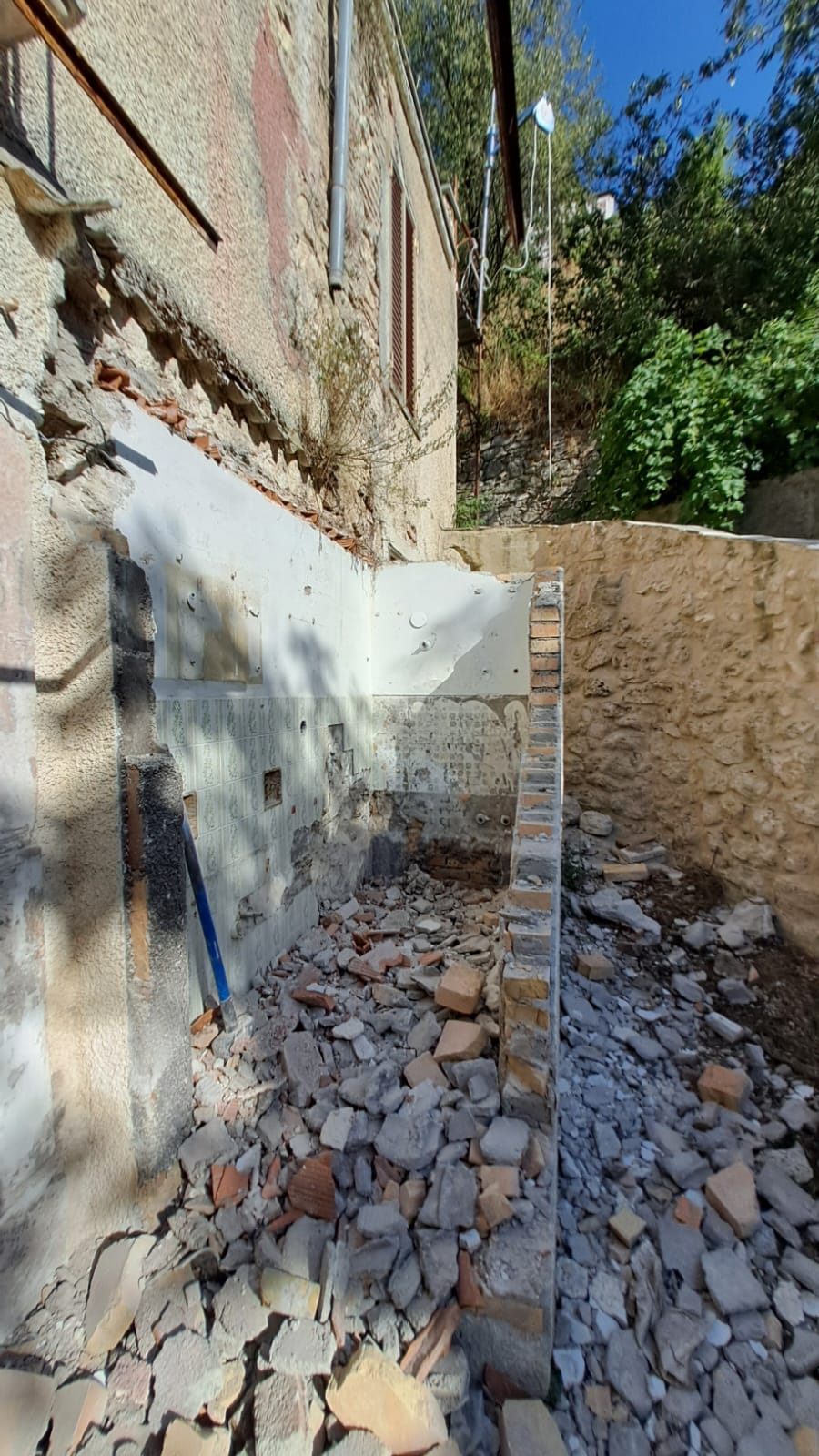
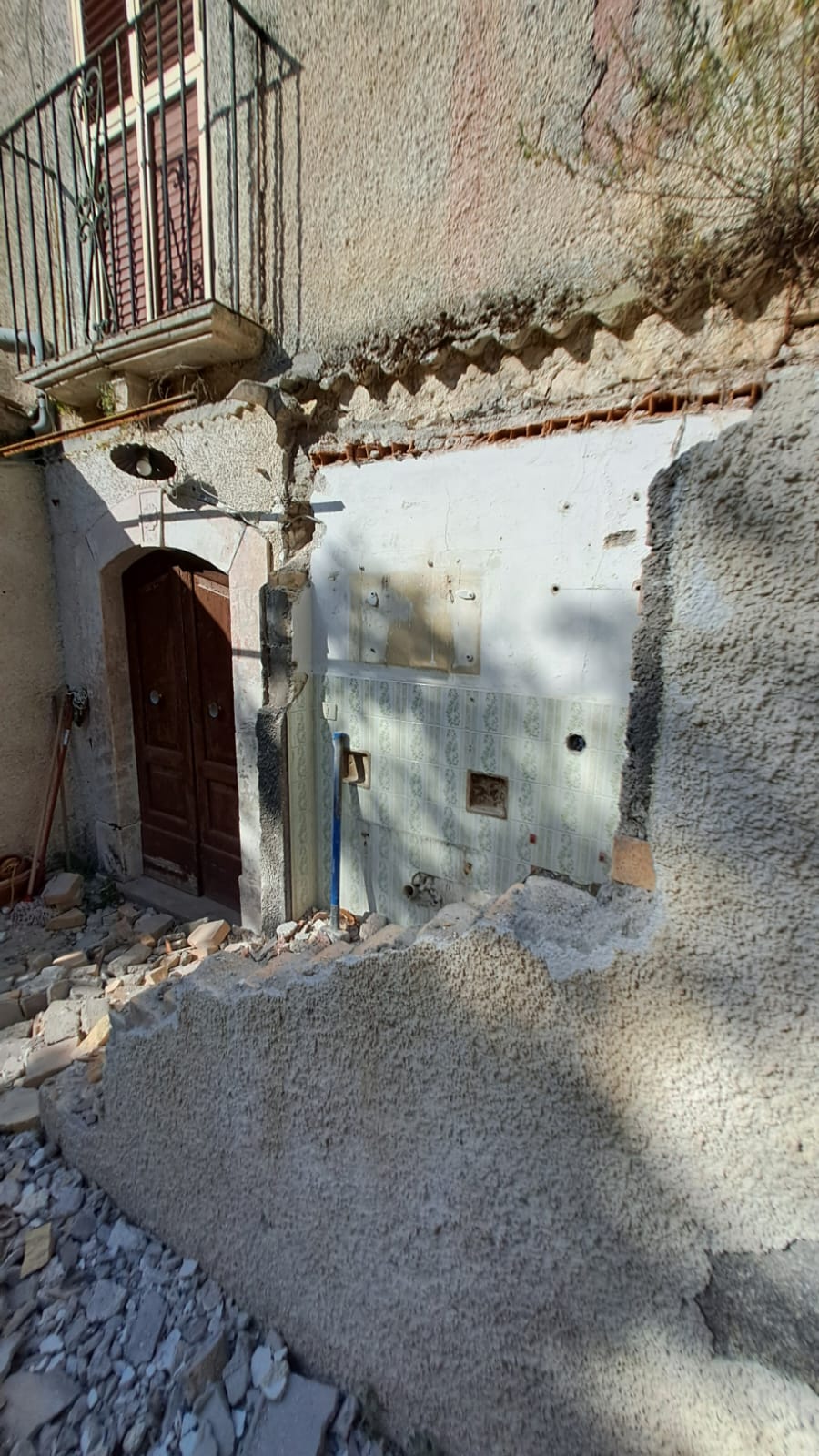
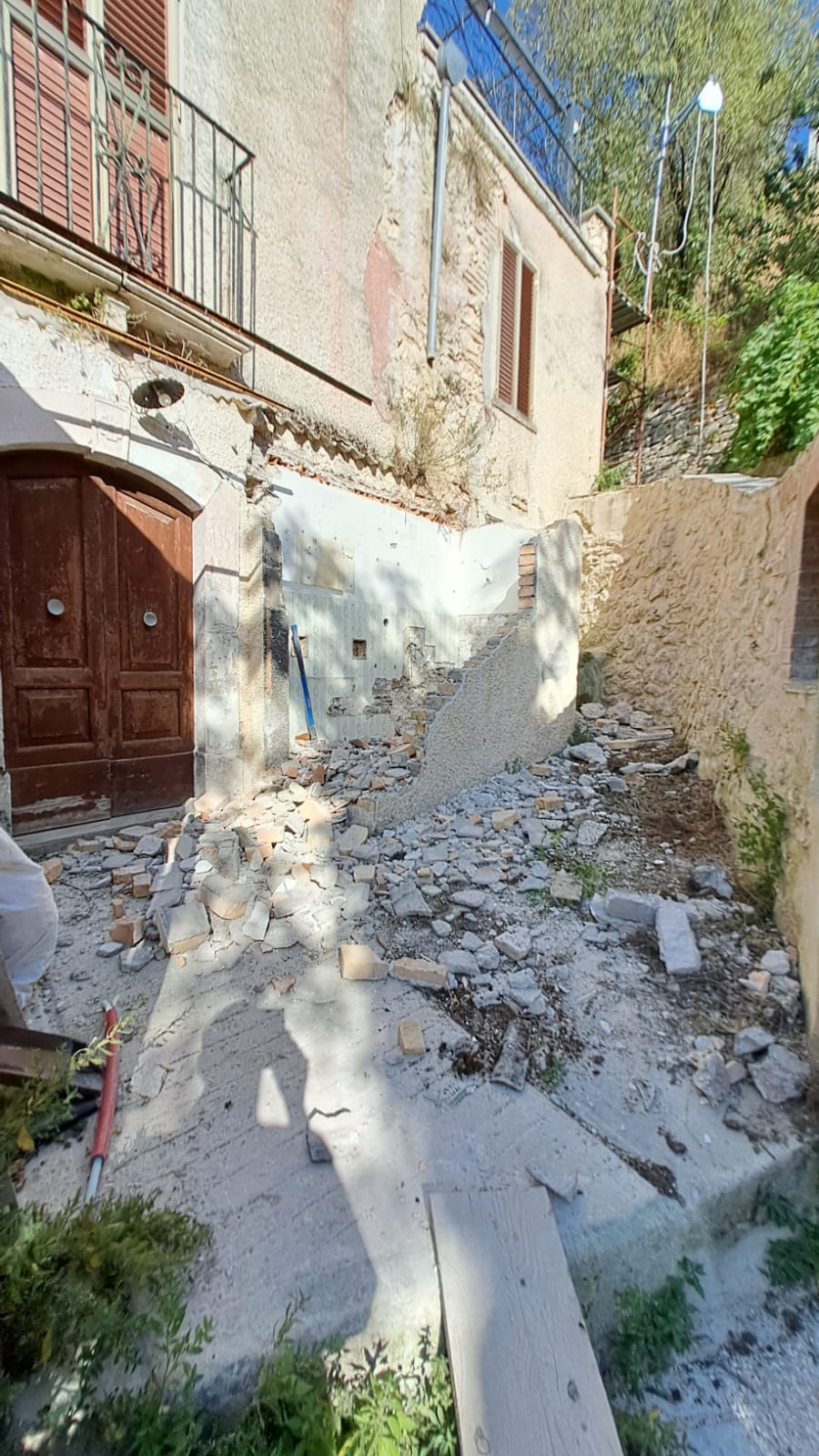
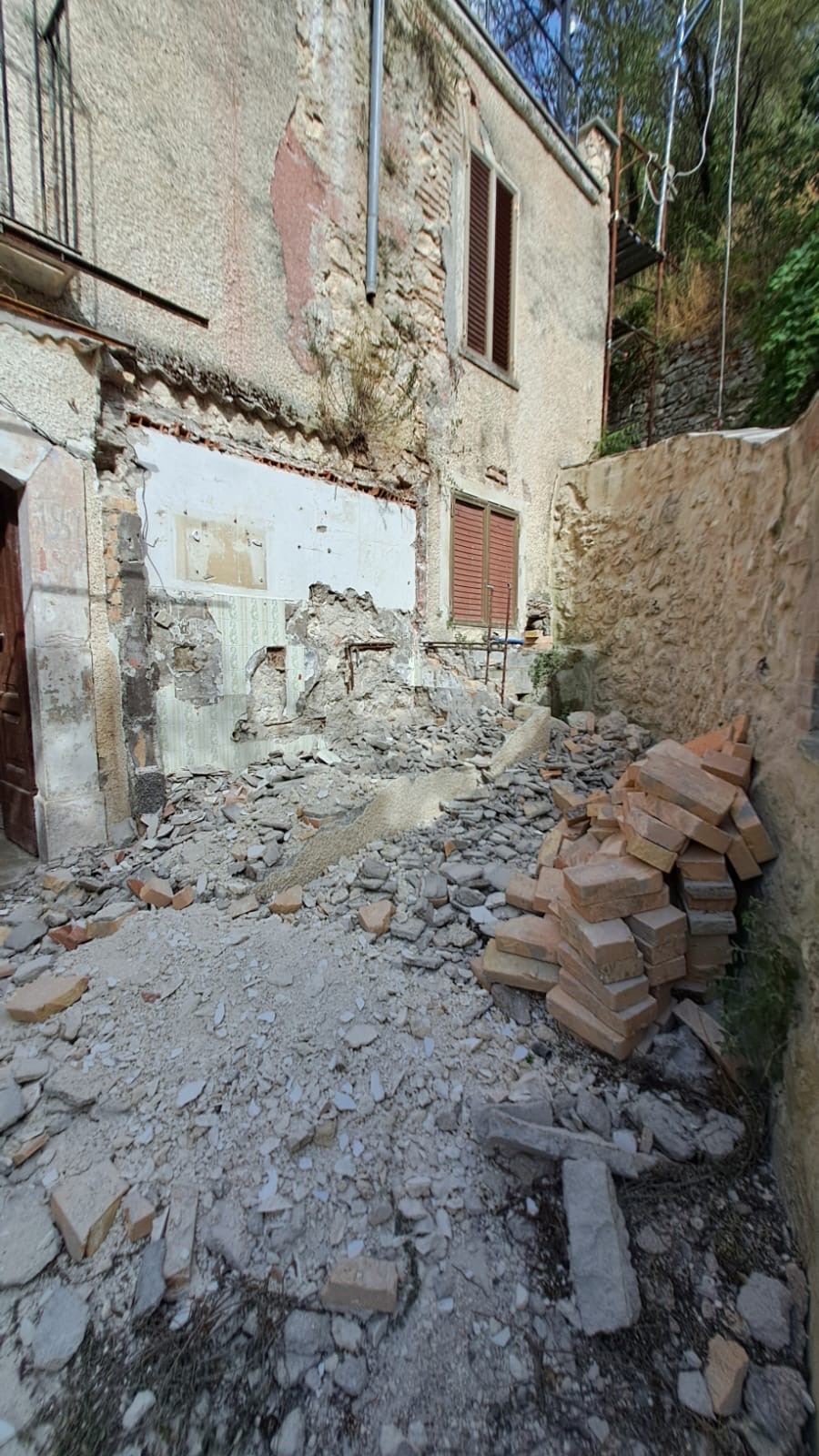
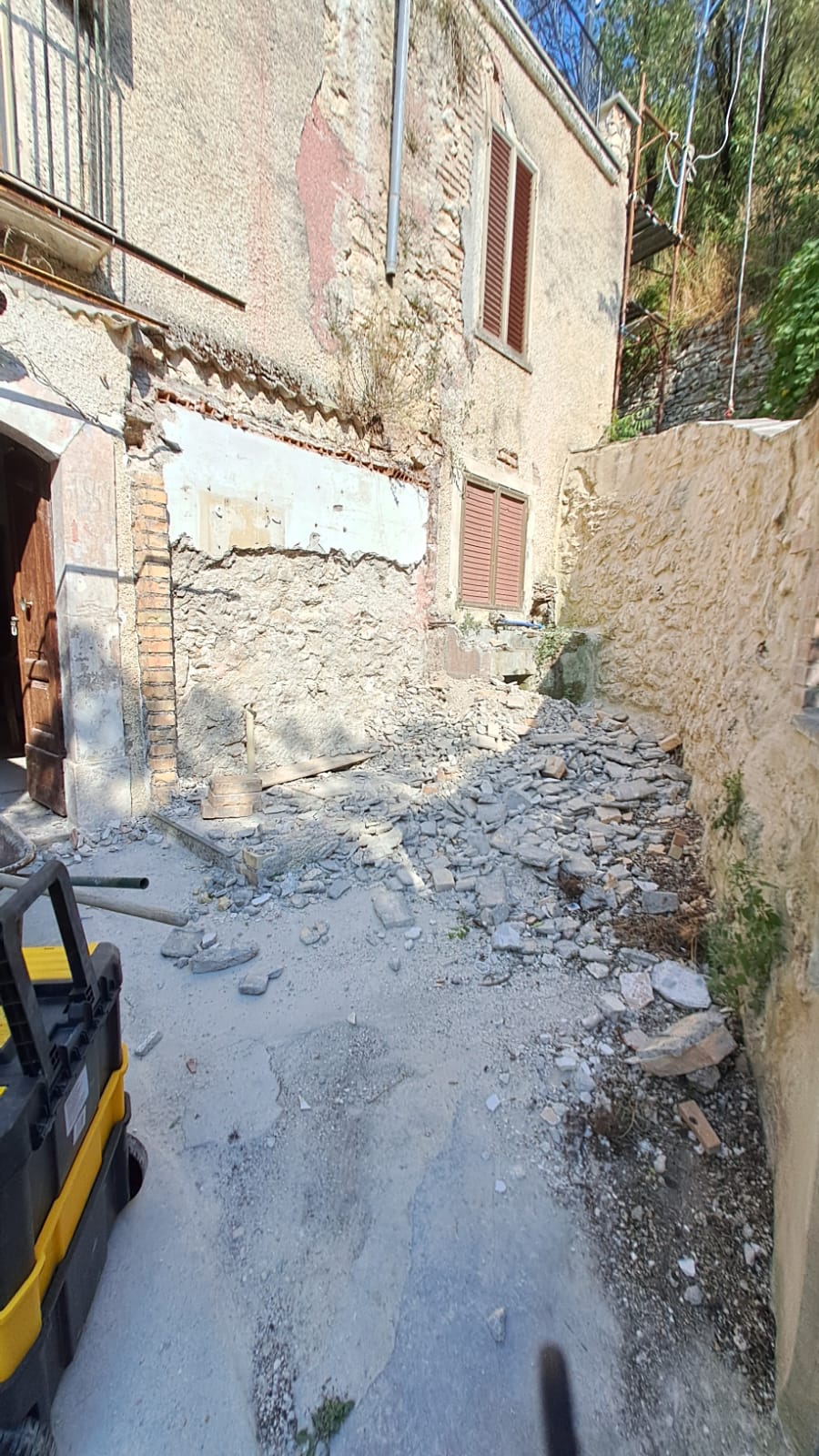
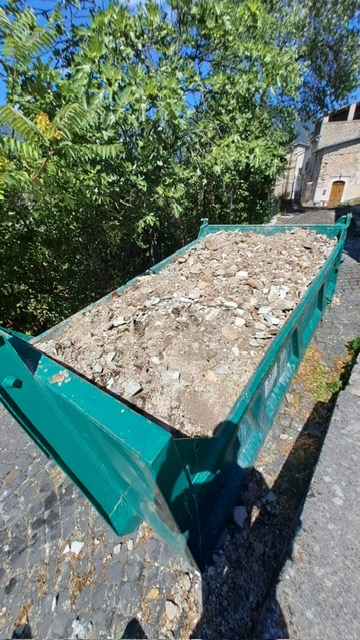
I wasn’t sentimental. Old houses deserve preservation, but preservation doesn’t mean every bad decision made during the previous three hundred years deserves immortality. The original stone house remained. The bathroom did not.
What remained were the stories. The winter mornings on the frozen toilet seat. The showers performed in the shape of an S. The wet toilet paper. The breaker trips. The emergency key. The deliveries that somehow arrived precisely when I couldn’t answer the door. The phone ringing inside while somebody stood outside listening to it.
And, finally, the day I walked toward it with a 20-pound sledgehammer convinced I was about to settle the score.
The bathroom won the first three rounds. I hired reinforcements.
The poltergeist bathroom is gone now. Good riddance.
But for a tiny room attached to the side of an old Italian house, it left behind an impressive number of memories, a healthier respect for masonry and, for several weeks, one very sore left foot.